
回顾
上文中我们对 RocketMQ 的 顺序消息 进行了 spring cloud 版本的演示,这里再回顾一下:
顺序消息分为 分区顺序消息 和 全局顺序消息。
全局顺序消息其实是分区顺序消息的一种特殊情况,即如果只有一个分区且同一时间只有一个消费者线程进行消费,那么就可以看作是全局顺序消息。
在 RocketMQ 创建 topic 时默认队列(分区)数量是:8 ,是针对所有 topic 的
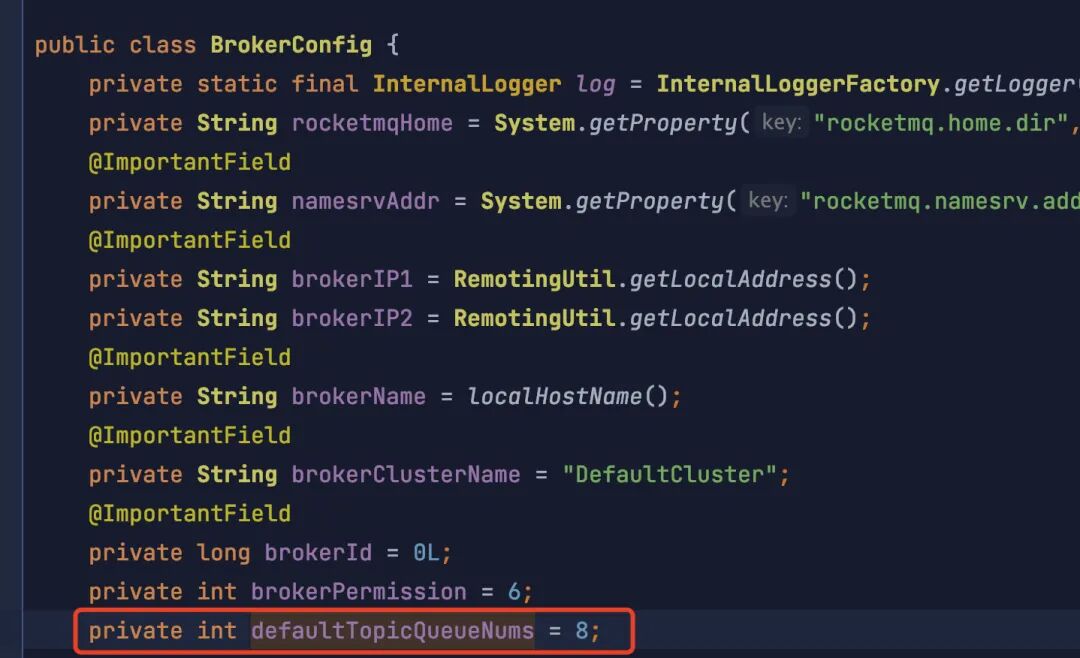
如果要单独设置一个 topic 的队列(分区)数量,在 spring cloud alibaba 中可以这样配置:
 1spring:
 2
 3  application:
 4    name: mq-example
 5  cloud:
 6    stream:
 7      bindings:
 8        # 定义 name 为 input 的 binding 消费
 9        input:
10          content-type: application/json
11          destination: test-topic3
12          group: consumer-group
13        # 定义 name 为 output 的 binding 生产
14        output-order:
15          content-type: application/json
16          destination: test-topic3
17          # Producer 配置项,对应 ProducerProperties 类
18          producer:
19            partitionCount: 1  # 分区数量
注意这里 partitionCount,如将该值设置为 1,则 broker 会将消息发送到同一个分区中。
原理
本文我们重点了解一下,RocketMQ 的顺序消息的实现原理。
在 MQ 的模型中,顺序需要由 3 个阶段去保障:
- 消息被发送时保持顺序
- 消息被存储时保持和发送的顺序一致
- 消息被消费时保持和存储的顺序一致
RocketMQ 要想实现顺序消息,核心就是 Producer 同步发送,确保一组顺序消息被发送到同一个分区队列,然后 Consumer 确保同一个队列只被一个线程消费
发送有序
这里我们串一下代码,看一下 producer 发送消息的时候是怎么实现顺序发送的:
  1private SendResult sendDefaultImpl(Message msg, CommunicationMode communicationMode, SendCallback sendCallback, long timeout) throws MQClientException, RemotingException, MQBrokerException, InterruptedException {
  2        this.makeSureStateOK();
  3        Validators.checkMessage(msg, this.defaultMQProducer);
  4        long invokeID = this.random.nextLong();
  5        long beginTimestampFirst = System.currentTimeMillis();
  6        long beginTimestampPrev = beginTimestampFirst;
  7        TopicPublishInfo topicPublishInfo = this.tryToFindTopicPublishInfo(msg.getTopic());
  8        if (topicPublishInfo != null && topicPublishInfo.ok()) {
  9            boolean callTimeout = false;
 10            MessageQueue mq = null;
 11            Exception exception = null;
 12            SendResult sendResult = null;
 13            int timesTotal = communicationMode == CommunicationMode.SYNC ? 1 + this.defaultMQProducer.getRetryTimesWhenSendFailed() : 1;
 14            int times = 0;
 15            String[] brokersSent = new String[timesTotal];
 16
 17            while(true) {
 18                label122: {
 19                    String info;
 20                    if (times < timesTotal) {
 21                        info = null == mq ? null : mq.getBrokerName();
 22                        MessageQueue mqSelected = this.selectOneMessageQueue(topicPublishInfo, info);
 23                        if (mqSelected != null) {
 24                            mq = mqSelected;
 25                            brokersSent[times] = mqSelected.getBrokerName();
 26
 27                            long endTimestamp;
 28                            try {
 29                                beginTimestampPrev = System.currentTimeMillis();
 30                                long costTime = beginTimestampPrev - beginTimestampFirst;
 31                                if (timeout >= costTime) {
 32                                    sendResult = this.sendKernelImpl(msg, mq, communicationMode, sendCallback, topicPublishInfo, timeout - costTime);
 33                                    endTimestamp = System.currentTimeMillis();
 34                                    this.updateFaultItem(mq.getBrokerName(), endTimestamp - beginTimestampPrev, false);
 35                                    switch(communicationMode) {
 36                                    case ASYNC:
 37                                        return null;
 38                                    case ONEWAY:
 39                                        return null;
 40                                    case SYNC:
 41                                        if (sendResult.getSendStatus() == SendStatus.SEND_OK || !this.defaultMQProducer.isRetryAnotherBrokerWhenNotStoreOK()) {
 42                                            return sendResult;
 43                                        }
 44                                    default:
 45                                        break label122;
 46                                    }
 47                                }
 48
 49                                callTimeout = true;
 50                            } catch (RemotingException var26) {
 51                                endTimestamp = System.currentTimeMillis();
 52                                this.updateFaultItem(mqSelected.getBrokerName(), endTimestamp - beginTimestampPrev, true);
 53                                this.log.warn(String.format("sendKernelImpl exception, resend at once, InvokeID: %s, RT: %sms, Broker: %s", invokeID, endTimestamp - beginTimestampPrev, mqSelected), var26);
 54                                this.log.warn(msg.toString());
 55                                exception = var26;
 56                                break label122;
 57                            } catch (MQClientException var27) {
 58                                endTimestamp = System.currentTimeMillis();
 59                                this.updateFaultItem(mqSelected.getBrokerName(), endTimestamp - beginTimestampPrev, true);
 60                                this.log.warn(String.format("sendKernelImpl exception, resend at once, InvokeID: %s, RT: %sms, Broker: %s", invokeID, endTimestamp - beginTimestampPrev, mqSelected), var27);
 61                                this.log.warn(msg.toString());
 62                                exception = var27;
 63                                break label122;
 64                            } catch (MQBrokerException var28) {
 65                                endTimestamp = System.currentTimeMillis();
 66                                this.updateFaultItem(mqSelected.getBrokerName(), endTimestamp - beginTimestampPrev, true);
 67                                this.log.warn(String.format("sendKernelImpl exception, resend at once, InvokeID: %s, RT: %sms, Broker: %s", invokeID, endTimestamp - beginTimestampPrev, mqSelected), var28);
 68                                this.log.warn(msg.toString());
 69                                exception = var28;
 70                                switch(var28.getResponseCode()) {
 71                                case 1:
 72                                case 14:
 73                                case 16:
 74                                case 17:
 75                                case 204:
 76                                case 205:
 77                                    break label122;
 78                                default:
 79                                    if (sendResult != null) {
 80                                        return sendResult;
 81                                    }
 82
 83                                    throw var28;
 84                                }
 85                            } catch (InterruptedException var29) {
 86                                endTimestamp = System.currentTimeMillis();
 87                                this.updateFaultItem(mqSelected.getBrokerName(), endTimestamp - beginTimestampPrev, false);
 88                                this.log.warn(String.format("sendKernelImpl exception, throw exception, InvokeID: %s, RT: %sms, Broker: %s", invokeID, endTimestamp - beginTimestampPrev, mqSelected), var29);
 89                                this.log.warn(msg.toString());
 90                                this.log.warn("sendKernelImpl exception", var29);
 91                                this.log.warn(msg.toString());
 92                                throw var29;
 93                            }
 94                        }
 95                    }
 96
 97                    if (sendResult != null) {
 98                        return sendResult;
 99                    }
100
101                    info = String.format("Send [%d] times, still failed, cost [%d]ms, Topic: %s, BrokersSent: %s", times, System.currentTimeMillis() - beginTimestampFirst, msg.getTopic(), Arrays.toString(brokersSent));
102                    info = info + FAQUrl.suggestTodo("http://rocketmq.apache.org/docs/faq/");
103                    MQClientException mqClientException = new MQClientException(info, (Throwable)exception);
104                    if (callTimeout) {
105                        throw new RemotingTooMuchRequestException("sendDefaultImpl call timeout");
106                    }
107
108                    if (exception instanceof MQBrokerException) {
109                        mqClientException.setResponseCode(((MQBrokerException)exception).getResponseCode());
110                    } else if (exception instanceof RemotingConnectException) {
111                        mqClientException.setResponseCode(10001);
112                    } else if (exception instanceof RemotingTimeoutException) {
113                        mqClientException.setResponseCode(10002);
114                    } else if (exception instanceof MQClientException) {
115                        mqClientException.setResponseCode(10003);
116                    }
117
118                    throw mqClientException;
119                }
120
121                ++times;
122            }
123        } else {
124            List<String> nsList = this.getmQClientFactory().getMQClientAPIImpl().getNameServerAddressList();
125            if (null != nsList && !nsList.isEmpty()) {
126                throw (new MQClientException("No route info of this topic, " + msg.getTopic() + FAQUrl.suggestTodo("http://rocketmq.apache.org/docs/faq/"), (Throwable)null)).setResponseCode(10005);
127            } else {
128                throw (new MQClientException("No name server address, please set it." + FAQUrl.suggestTodo("http://rocketmq.apache.org/docs/faq/"), (Throwable)null)).setResponseCode(10004);
129            }
130        }
131    }
上面是消息发送的代码,下面梳理下主要流程:
消息发送时,先根据 Topic 从 Broker 拉取 TopicPublishInfo 信息,它里面包含了 Topic 下所有的 MessageQueue。
 1 TopicPublishInfo topicPublishInfo = this.tryToFindTopicPublishInfo(msg.getTopic());
 2
 3 private TopicPublishInfo tryToFindTopicPublishInfo(String topic) {
 4        TopicPublishInfo topicPublishInfo = (TopicPublishInfo)this.topicPublishInfoTable.get(topic);
 5        if (null == topicPublishInfo || !topicPublishInfo.ok()) {
 6            this.topicPublishInfoTable.putIfAbsent(topic, new TopicPublishInfo());
 7            this.mQClientFactory.updateTopicRouteInfoFromNameServer(topic);
 8            topicPublishInfo = (TopicPublishInfo)this.topicPublishInfoTable.get(topic);
 9        }
10
11        if (!topicPublishInfo.isHaveTopicRouterInfo() && !topicPublishInfo.ok()) {
12            this.mQClientFactory.updateTopicRouteInfoFromNameServer(topic, true, this.defaultMQProducer);
13            topicPublishInfo = (TopicPublishInfo)this.topicPublishInfoTable.get(topic);
14            return topicPublishInfo;
15        } else {
16            return topicPublishInfo;
17        }
18    }
19
20public class TopicPublishInfo {
21    private boolean orderTopic = false;
22    private boolean haveTopicRouterInfo = false;
23    private List<MessageQueue> messageQueueList = new ArrayList();
24    private volatile ThreadLocalIndex sendWhichQueue = new ThreadLocalIndex();
25    private TopicRouteData topicRouteData;
26
27    public TopicPublishInfo() {
28    }
29    ...
选取一个目标队列:
1 MessageQueue mqSelected = this.selectOneMessageQueue(topicPublishInfo, info);
接着调用核心发送方法,将消息发送到 broker
1sendResult = this.sendKernelImpl(msg, mq, communicationMode, sendCallback, topicPublishInfo, timeout - costTime);
必须使用同步发送,异步/单向发送都无法保证消息被有序写入队列
sendKernelImpl 方法中有同/异步的判断,这里应该是走的 case SYNC
 1case ASYNC:
 2    Message tmpMessage = msg;
 3    if (msgBodyCompressed) {
 4        tmpMessage = MessageAccessor.cloneMessage(msg);
 5        msg.setBody(prevBody);
 6    }
 7
 8    long costTimeAsync = System.currentTimeMillis() - beginStartTime;
 9    if (timeout < costTimeAsync) {
10        throw new RemotingTooMuchRequestException("sendKernelImpl call timeout");
11    }
12
13    sendResult = this.mQClientFactory.getMQClientAPIImpl().sendMessage(brokerAddr, mq.getBrokerName(), tmpMessage, requestHeader, timeout - costTimeAsync, communicationMode, sendCallback, topicPublishInfo, this.mQClientFactory, this.defaultMQProducer.getRetryTimesWhenSendAsyncFailed(), context, this);
14    break;
15case ONEWAY:
16case SYNC:
17    long costTimeSync = System.currentTimeMillis() - beginStartTime;
18    if (timeout < costTimeSync) {
19        throw new RemotingTooMuchRequestException("sendKernelImpl call timeout");
20    }
21
22    sendResult = this.mQClientFactory.getMQClientAPIImpl().sendMessage(brokerAddr, mq.getBrokerName(), msg, requestHeader, timeout - costTimeSync, communicationMode, context, this);
23    break;
24default:
25    assert false;
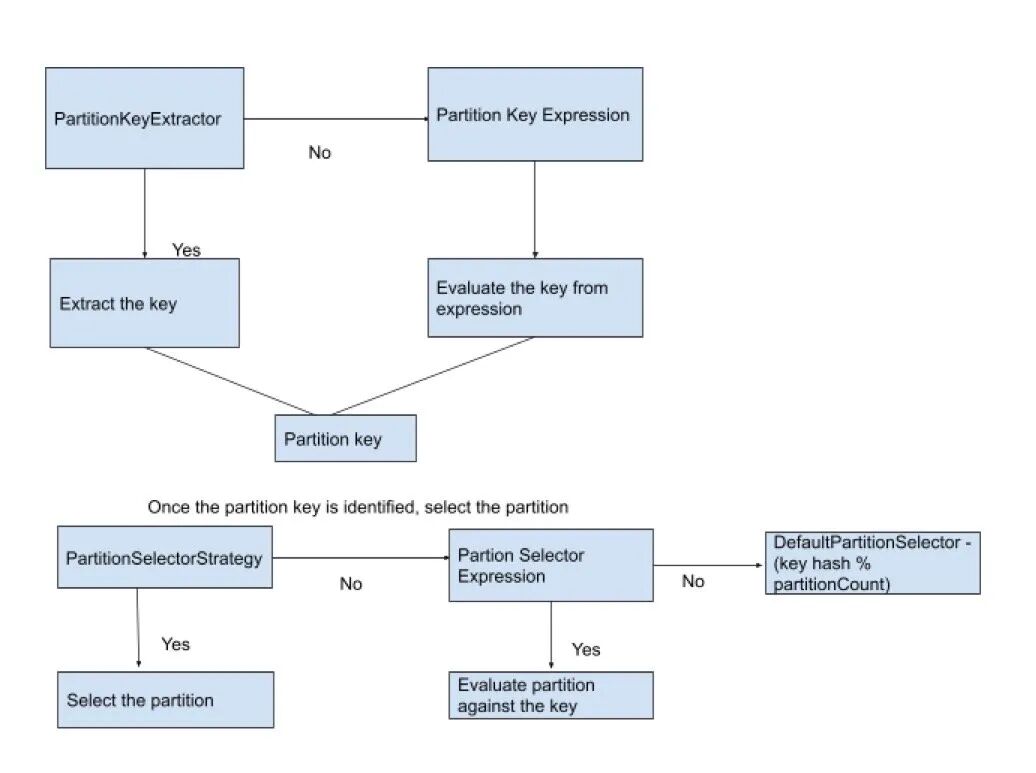
Producer 保证发送有序,只要保证相同 ShardingKey 的消息发送到同一队列即可,以 spring cloud stream 的实现为例,可以查看 PartitionHandler 类中的 determinePartition 方法
 1 public int determinePartition(Message<?> message) {
 2        Object key = this.extractKey(message);
 3        int partition;
 4        if (this.producerProperties.getPartitionSelectorExpression() != null) {
 5            partition = (Integer)this.producerProperties.getPartitionSelectorExpression().getValue(this.evaluationContext, key, Integer.class);
 6        } else {
 7            partition = this.partitionSelectorStrategy.selectPartition(key, this.partitionCount);
 8        }
 9
10        return Math.abs(partition % this.partitionCount);
11    }
可以看到 partition 的值如果之前配置了分区 key 表达式如:
1 producer:
2   partition-key-expression: payload['id']
则值是表达式的值,如没有配置,则走默认策略,默认策略的实现取的是消息的 hash:
 1private static class DefaultPartitionSelector implements PartitionSelectorStrategy {
 2        private DefaultPartitionSelector() {
 3        }
 4
 5        public int selectPartition(Object key, int partitionCount) {
 6            int hashCode = key.hashCode();
 7            if (hashCode == -2147483648) {
 8                hashCode = 0;
 9            }
10
11            return Math.abs(hashCode);
12        }
13    }
最后队列的选择是利用 partition 和队列(分区)总数取模后得到的结果。 这样就可以保证相同 ShardingKey 的消息发送到同一队列了。
整体的流程如下图:
消息发送后,由于队列本身的 FIFO 特性,它保存到 broker 端也是有序的。
消费有序
Consumer 默认是多线程并发消费同一个 MessageQueue 的,即使消息是顺序到达的,也不能保证消息顺序消费。
那么 RocketMQ 如何保证消息顺序消费呢?
与 producer 一样,我们按照 consumer 的流程串一下代码
consumer 启动时,在 MQClientInstance 类的 start 方法中进行了重平衡操作:
 1public void start() throws MQClientException {
 2
 3        synchronized (this) {
 4            switch (this.serviceState) {
 5                case CREATE_JUST:
 6                    this.serviceState = ServiceState.START_FAILED;
 7                    // If not specified,looking address from name server
 8                    if (null == this.clientConfig.getNamesrvAddr()) {
 9                        this.mQClientAPIImpl.fetchNameServerAddr();
10                    }
11                    // Start request-response channel
12                    this.mQClientAPIImpl.start();
13                    // Start various schedule tasks
14                    this.startScheduledTask();
15                    // Start pull service
16                    this.pullMessageService.start();
17                    // Start rebalance service
18                    this.rebalanceService.start();
19                    // Start push service
20                    this.defaultMQProducer.getDefaultMQProducerImpl().start(false);
21                    log.info("the client factory [{}] start OK", this.clientId);
22                    this.serviceState = ServiceState.RUNNING;
23                    break;
24                case START_FAILED:
25                    throw new MQClientException("The Factory object[" + this.getClientId() + "] has been created before, and failed.", null);
26                default:
27                    break;
28            }
29        }
30    }
就是这一行 rebalanceService.start() ,它的目的是给自己分配 MessageQueue。要保证一个队列被一个消费者消费,那么消费者在进行消息拉取消费时就必须向 mq 服务器申请队列锁。如果申请到琐,则拉取消息,否则放弃消息拉取,等到下一个队列负载周期 (20s) 再试。
申请锁可以参考 RebalanceImpl类 updateProcessQueueTableInRebalance 和 lock 方法中的代码:
 1 //如果是顺序消息,需要向 Broker 申请锁队列,加锁成功才开始消费。
 2for (MessageQueue mq : mqSet) {
 3    if (!this.processQueueTable.containsKey(mq)) {
 4        if (isOrder && !this.lock(mq)) {
 5            log.warn("doRebalance, {}, add a new mq failed, {}, because lock failed", consumerGroup, mq);
 6            continue;
 7        }
 8
 9        this.removeDirtyOffset(mq);
10        ProcessQueue pq = new ProcessQueue();
11
12public boolean lock(final MessageQueue mq) {
13    // 查找 Broker Master 主机地址
14    FindBrokerResult findBrokerResult = this.mQClientFactory.findBrokerAddressInSubscribe(mq.getBrokerName(), MixAll.MASTER_ID, true);
15    if (findBrokerResult != null) {
16        // 构建请求体
17        LockBatchRequestBody requestBody = new LockBatchRequestBody();
18        requestBody.setConsumerGroup(this.consumerGroup);// 消费组
19        requestBody.setClientId(this.mQClientFactory.getClientId());// 客户端实例 ID
20        requestBody.getMqSet().add(mq);// 申请锁哪些队列
21
22        try {
23            // 发送请求,Broker 返回锁住的队列集合
24            Set<MessageQueue> lockedMq =
25                this.mQClientFactory.getMQClientAPIImpl().lockBatchMQ(findBrokerResult.getBrokerAddr(), requestBody, 1000);
26            for (MessageQueue mmqq : lockedMq) {
27                ProcessQueue processQueue = this.processQueueTable.get(mmqq);
28                if (processQueue != null) {
29                    processQueue.setLocked(true);
30                    processQueue.setLastLockTimestamp(System.currentTimeMillis());
31                }
32            }
33            // 目标队列在里面,就说明加锁成功了
34            boolean lockOK = lockedMq.contains(mq);
35            log.info("the message queue lock {}, {} {}",
36                     lockOK ? "OK" : "Failed",
37                     this.consumerGroup,
38                     mq);
39            return lockOK;
40        } catch (Exception e) {
41            log.error("lockBatchMQ exception, " + mq, e);
42        }
43    }
44    return false;
45}
这个锁是 Broker 维护的全局锁。
一旦加锁成功,就会开始构建 PullRequest 对象开始拉取消息,消息拉取部分的代码实现在 PullMessageService 中,拉取成功后,在 PullCallback 里会将拉取到的消息填充到 ProcessQueue,然后提交消费请求,让 ConsumeMessageOrderlyService 开始消费消息。
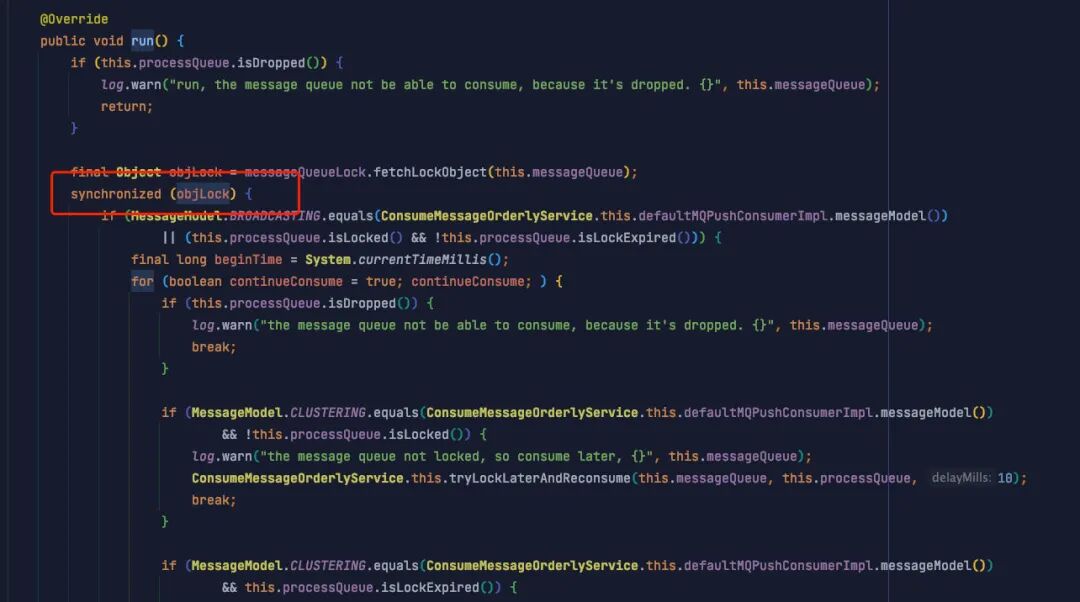
消费消息时,先获取 MessageQueue 的锁对象,然后通过 synchronized 关键字保证只有一个线程消费
对于顺序消息,当消费者消费消息失败后,消息队列 RocketMQ 会自动不断地进行消息重试(每次间隔时间为 1 秒),重试最大值是 Integer.MAX_VALUE
 1case SUSPEND_CURRENT_QUEUE_A_MOMENT:
 2    this.getConsumerStatsManager().incConsumeFailedTPS(consumerGroup, consumeRequest.getMessageQueue().getTopic(), msgs.size());
 3    // 校验最大重试次数,默认 Integer.MAX_VALUE
 4    if (checkReconsumeTimes(msgs)) {
 5        // 标记消息等待重新消费
 6        consumeRequest.getProcessQueue().makeMessageToConsumeAgain(msgs);
 7        // 提交消费请求,稍后重试
 8        this.submitConsumeRequestLater(
 9            consumeRequest.getProcessQueue(),
10            consumeRequest.getMessageQueue(),
11            context.getSuspendCurrentQueueTimeMillis());
12        continueConsume = false;
13    } else {
14        commitOffset = consumeRequest.getProcessQueue().commit();
15    }
16    break;
最后补充一点,在消费的过程中,会对处理队列 (ProccessQueue) 进行加锁,保证处理中的消息消费完成,发生队列负载后,其他消费者才能继续消费。
例如队列 q3 目前是分配给消费者 C2 进行消费,已将拉取了 32 条消息在线程池中处理,然后对消费者进行了扩容,分配给 C2 的 q3 队列,被分配给 C3 了,由于 C2 已将处理了一部分,位点信息还没有提交,如果 C3 立马去消费 q3 队列中的消息,那存在一部分数据会被重复消费,故在 C2 消费者在消费 q3 队列的时候,消息没有消费完成,那负载队列就不能丢弃该队列,就不会在 broker 端释放琐,其他消费者就无法从该队列消费,尽最大可能保证了消息的重复消费,保证顺序性语义
消费总结 :
- 创建消息拉取任务时,消息客户端向 broker 端申请锁定 MessageQueue,使得一个 MessageQueue 同一个时刻只能被一个消费客户端消费
- 消息消费时,多线程针对同一个消息队列的消费先尝试使用 synchronized 申请独占锁,加锁成功才能进行消费,使得一个 MessageQueue 同一个时刻只能被一个消费客户端中一个线程消费
- RocketMQ 中每一个消费组一个单独的线程池并发消费拉取到的消息,即消费端是多线程消费。而顺序消费的并发度等于该消费者分配到的队列数。消费并行度理论上不会有太大问题,因为 MessageQueue 的数量可以调整。
- 在消费的过程中,会对处理队列 (ProccessQueue) 进行加锁,保证处理中的消息消费完成
- 顺序消息一旦消费失败,默认会一直重试,不会跳过,因为一旦跳过就失去顺序消息的语义了
顺序消息可能存在的问题
消息阻塞
在顺序性语义的要求下,如果一条消息没有被成功消费,下一条消息就不能被消费,否则就不是顺序消费了。一条消息失败,如果跳过去消费其他消息,那就违背了顺序消费的语义。
建议在使用顺序消息时,务必保证应用能够及时监控并处理消费失败的情况,避免阻塞现象的发生。可以提供一些策略,由用户根据错误类型来决定是否跳过,并且提供重试队列之类的功能,在跳过之后用户可以在“其他”地方重新消费到这条消息。
failover 失效
发送顺序消息无法利用集群的 Failover 特性,因为不能更换 MessageQueue 进行重试